
Medical Writing

Expert consensus

Expert consensus addresses a defined clinical question, combining available evidence with structured consultation to develop recommendations and define their scope. The document is intended for clinical professionals, Medical Affairs teams and academic reviewers.

Service scope
We organise expert consultation and prepare the consensus document; we do not select experts or organise meetings.

Consensus reports must distinguish research evidence from expert judgement, explain how recommendations were developed, and retain disagreements and items without consensus. Reaching consensus does not mean that the evidence is sufficient or that a recommendation applies to every population.

01 · Deliverables

A complete record of clinical questions, evidence and expert judgement

Evidence, the consultation process and consensus conclusions are recorded separately.

Deliverables

Expert consensus

Service scope
We organise expert consultation and prepare the consensus document; we do not select experts or organise meetings.
Deliverables

Evidence summaries, consultation materials, comment resolution records and a consensus report.

Specifications and timeline
1 set of consensus documents, including the evidence grading method; the plan includes 2 rounds of expert consultation and retains items without consensus. Timelines are confirmed for each project.
Pricing basis
We first issue a requirement confirmation form, followed by an itemised quotation.

The consensus document includes the evidence grading method. Items without consensus are retained in the report; deleting disagreements does not replace comment resolution.

Rounds of expert consultation and manuscript revision are recorded separately. Standard manuscript revision provision includes at least 2 rounds of internal quality control plus 2 rounds of client revisions.
02 · Content structure

Consensus report chapters

The structure below illustrates report content; each chapter must reflect the methods actually used.

Figure 1 Consensus report structure · Illustrative structureContext/aimMethods/evidenceConsultation resultsAdvice and limitsDiscuss/discloseEvidence → Opinions → LimitsFigure 1 Consensus report structure · Illustrative structureContext/aimMethods/evidenceConsultation resultsAdvice and limitsDiscuss/discloseEvidence → Opinions → Limits
Figure 1Consensus report structureIllustrative structure
Figure caption

Illustrative chapters, without expert opinions or study results.

Background and aims
Describe the clinical question, intended readers and scope of the consensus.
Methods and evidence
Describe evidence searches and appraisal, participant composition, consultation procedures and prespecified decision rules.
Consultation results
Present feedback from each round, item revisions, and results for items with and without consensus.
Advice and limits
For each recommendation, describe its basis, applicable populations and gaps in the evidence.
Discussion/disclosure
Record limitations, conflicts of interest, funding and writing support; append the necessary consultation materials.

03 · Work steps

Expert consultation and document preparation

The choice of methods, decision rules and opinion records together determine how the report can be interpreted.

  1. Define questions and methods

    Define the questions, evidence scope, rating method and consensus decision rules before preparing consultation materials.

  2. Prepare evidence and items

    Link evidence summaries to proposed consultation items, distinguishing existing evidence, evidence gaps and matters requiring expert judgement.

  3. Consultation and feedback

    Compile ratings and written comments from each round under the agreed plan, recording additions, deletions, wording changes and the reasons for them.

  4. Check results and manuscript

    Keep the consensus report consistent with consultation records, retain items without consensus truthfully, and resolve author review comments individually.

Delphi method

Judgements are collected through multiple rounds of consultation and controlled feedback, usually with anonymous ratings. The methods should describe the rounds, feedback content and stopping rules.

Nominal group technique

This usually involves independent idea generation, round-robin presentation, clarification and discussion, and independent ranking or voting. Meeting discussions and final voting results are recorded separately.

Our consensus plan includes 2 rounds of expert consultation. The nominal group technique is described here as a method and does not constitute a commitment to organise meetings. We do not select experts or organise meetings.

04 · Standards and guidance

Guidance on reporting methods and publication disclosures

Reporting guidelines explain how consensus was developed; they cannot replace methodological design or experts' independent judgement.

Guidance on reporting methods and publication disclosures
Standard and scopeVersion, content and purpose
Reporting consensus methodsThe 35-item checklist in Table 4 of the ACcurate COnsensus Reporting Document (ACCORD, 2024) covers the title, introduction, methods, results, discussion and other information. It applies to consensus methods such as Delphi and the nominal group technique; item M9 requires a description of the methods and steps used. See ACCORD article and checklist.
Authorship and non-author contributionsIn the International Committee of Medical Journal Editors (ICMJE) Recommendations for the Conduct, Reporting, Editing, and Publication of Scholarly Work in Medical Journals (January 2026), section II.A.2 defines authorship criteria and section II.A.3 addresses acknowledgement of non-author contributions. See ICMJE recommendations on authors and contributors.
Publication practice for company-sponsored researchGood Publication Practice 2022 (GPP 2022) applies to publications from company-sponsored biomedical research. Item 3 of the Principles for Ensuring Transparency concerns disclosure of funding and relevant interests; item 3 of the Principles for Authorship, Contributorship, and Accountability concerns authorship and acknowledgements. See GPP 2022 publication page.

05 · Samples and examples

Presenting consultation results

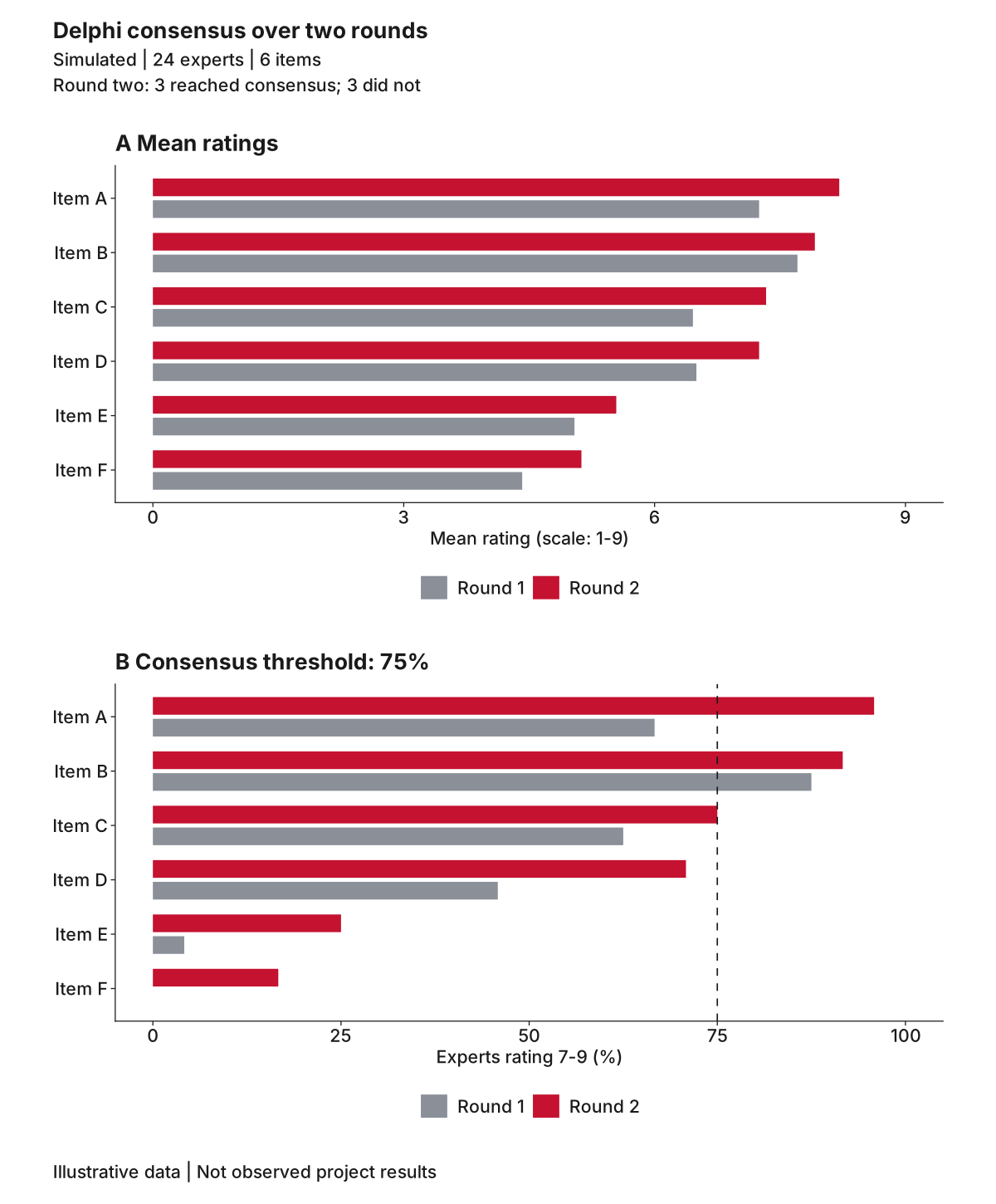
The example shows the relationship between rating distributions and consensus decisions.

The number of participants, rounds and thresholds in the figure are specific to this example, and are not universal methodological requirements for consensus studies.

Figure 2 Two-round Delphi ratings and consensus · Illustrative data
Figure 2Two-round Delphi ratings and consensusIllustrative data
Figure caption

The data are simulated. 24 experts rated 6 items over 2 rounds on a scale of 1–9; consensus was predefined as at least 75% of experts giving a rating of 7 or above. In the second round, 3 items reached consensus and 3 did not. The figure shows mean-rating bars alongside the proportion of high ratings; it does not represent real expert opinions.

06 · Frequently asked questions

Frequently asked questions

Expert selection and meeting organisation

We do not select experts or organise meetings. Our scope covers expert consultation and preparation of the consensus document.

Handling items without consensus

Items without consensus remain in the report, with their results and handling explained; they are not rewritten as positive recommendations.

Authorship and disclosure of involvement

We do not claim authorship. The client and author team determine authorship against the four ICMJE criteria. Our contribution is disclosed in the acknowledgements in line with ICMJE and GPP 2022; we are not listed as authors. This truthfully identifies our writing and statistical support and funding sources. We do not undertake writing that conceals our involvement.

Publication outcomes

We do not promise publication outcomes. Acceptance is decided by the journal editorial office and peer review.

Get started · Submit a request

Submit a medical writing request

Please provide the proposed clinical questions, available evidence and materials, the planned consultation method, current progress and target dates.

Submit a medical writing requestWe first issue a requirement confirmation form, followed by an itemised quotation and schedule. Reply within 24 hours (business days first). · contact@yantohealth.cn